 Épingler
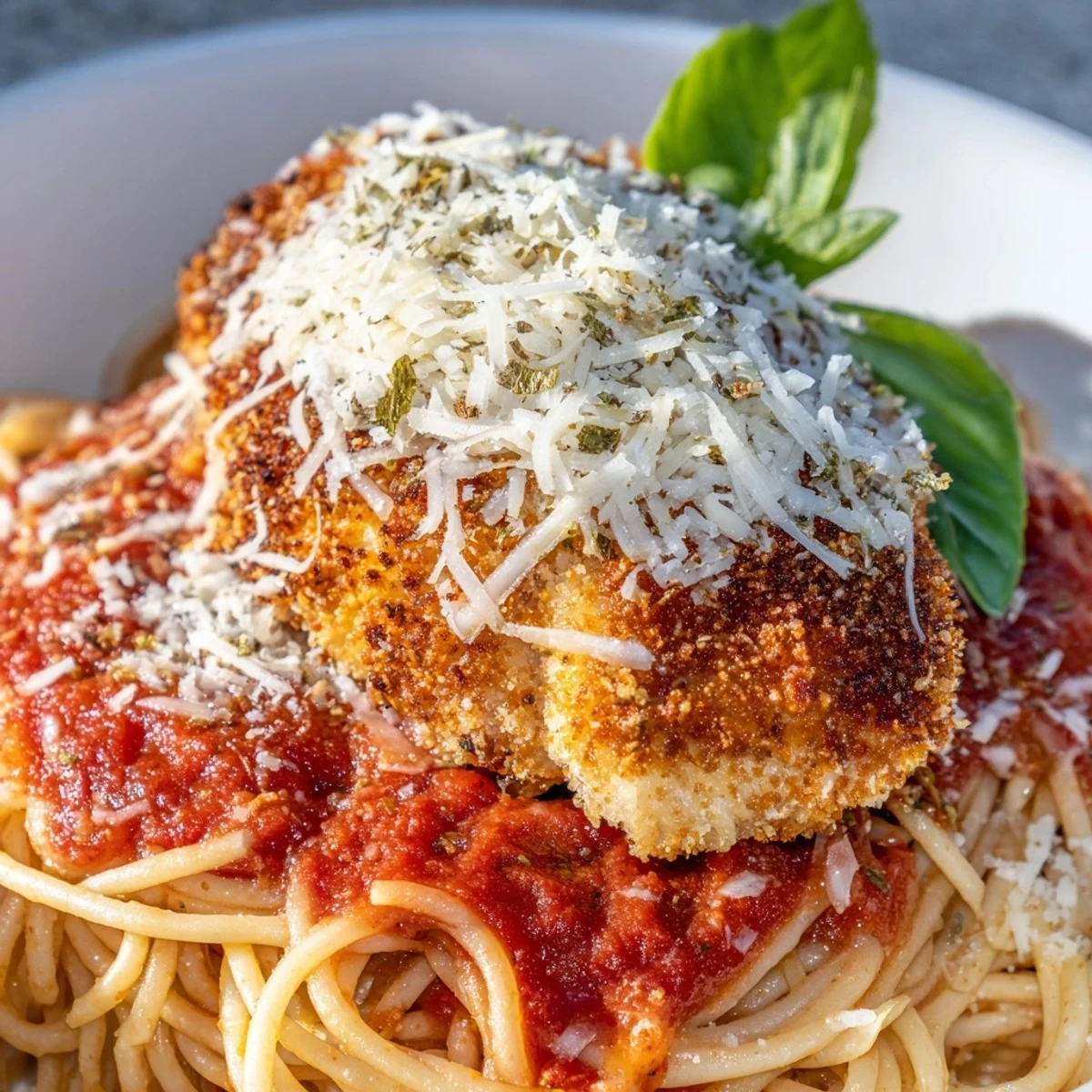
 Préparez un dîner satisfaisant en enrobant des filets de poulet d'une chapelure assaisonnée et en les faisant frire jusqu'à ce qu'ils soient dorés. Nappez de sauce marinara maison, généreusement saupoudrée de mozzarella fondante, et terminez la cuisson au four. Servez chaud sur un lit de spaghettis al dente pour un repas classique.
There's something about the sizzle of chicken hitting hot oil that makes me feel like I'm in a proper kitchen, even when I'm just cooking dinner on a Tuesday night. My neighbor's mother once told me that chicken Parmesan is the dish that taught her how to cook—not because it's fancy, but because it demanded respect for each step, from the satisfying pound of the mallet to that golden crust. I've made it hundreds of times since, and it never fails to fill the apartment with a smell that somehow makes everyone hungrier than they actually are.
I made this for my partner on a rainy evening when neither of us had the energy for anything complicated, and it turned into this quiet moment where we just sat across from each other and ate in comfortable silence. There's something about twirling spaghetti on a fork and cutting into warm, melted cheese that slows time down a little. That night, it wasn't just dinner—it was a small reset button for the week.
Ingredients
- Boneless, skinless chicken breasts: Four of them, and they're the foundation—the better quality you can find, the more tender they'll be after cooking.
- All-purpose flour: One cup is your first breading layer, and it helps the egg wash stick properly.
- Eggs and milk: Two eggs whisked with two tablespoons of milk create a binding layer that holds everything together like edible glue.
- Italian-style breadcrumbs: One and a half cups mixed with half a cup of Parmesan, garlic powder, oregano, salt, and pepper—this is where the flavor lives.
- Olive oil for frying: A third of a cup is enough to get that golden crust without turning it into a deep-fried situation.
- Mozzarella and Parmesan cheeses: One and a half cups shredded mozzarella and another half cup of Parmesan for topping—the melting magic happens here.
- For the sauce—garlic, onion, crushed tomatoes: Four cloves of garlic and a small onion make a humble base that becomes something rich and deep after simmering.
- Dried basil and oregano: A teaspoon each, and they're non-negotiable for that Italian voice in every bite.
- Spaghetti: Twelve ounces, because the pasta is just as important as what goes on top.
Instructions
- Heat your oven and prep your workspace:
- Get your oven to 400°F and line a baking sheet with parchment paper—this is your landing pad for the chicken after it comes out of the skillet.
- Pound the chicken to even thickness:
- Place each breast between two sheets of plastic wrap and use a meat mallet or rolling pin to pound it to about a half-inch thick. This matters more than you might think, because even cooking depends on even thickness.
- Set up your breading station:
- Three shallow bowls in a line: flour in the first, eggs whisked with milk in the second, and breadcrumbs mixed with Parmesan, garlic powder, oregano, salt, and pepper in the third. This assembly line approach keeps your hands from becoming a breadcrumb disaster.
- Bread each chicken breast:
- Dredge in flour, shake off the excess, dip in egg, then coat thoroughly in breadcrumbs, pressing gently so it sticks. You'll feel the coating get thicker and more substantial with each layer.
- Fry the chicken until golden:
- Heat olive oil in a large skillet over medium-high heat—you'll know it's ready when a breadcrumb sizzles immediately. Fry each breast two to three minutes per side until the coating is deep golden brown, then transfer to your baking sheet.
- Make the marinara sauce:
- In a saucepan, heat olive oil and sauté minced garlic and chopped onion until soft, about three minutes, then add crushed tomatoes, basil, oregano, sugar, salt, and pepper. Let it simmer uncovered for fifteen minutes, stirring occasionally so it doesn't stick.
- Top the chicken and bake:
- Spoon marinara sauce over each fried breast, then top with mozzarella and Parmesan. Bake for fifteen minutes until the cheese is bubbly and the chicken reaches an internal temperature of 165°F.
- Cook the spaghetti:
- Bring a large pot of salted water to a boil, add spaghetti, and cook according to package instructions until al dente. The water should taste like the sea—that's how you know the pasta will actually have flavor.
- Plate and serve:
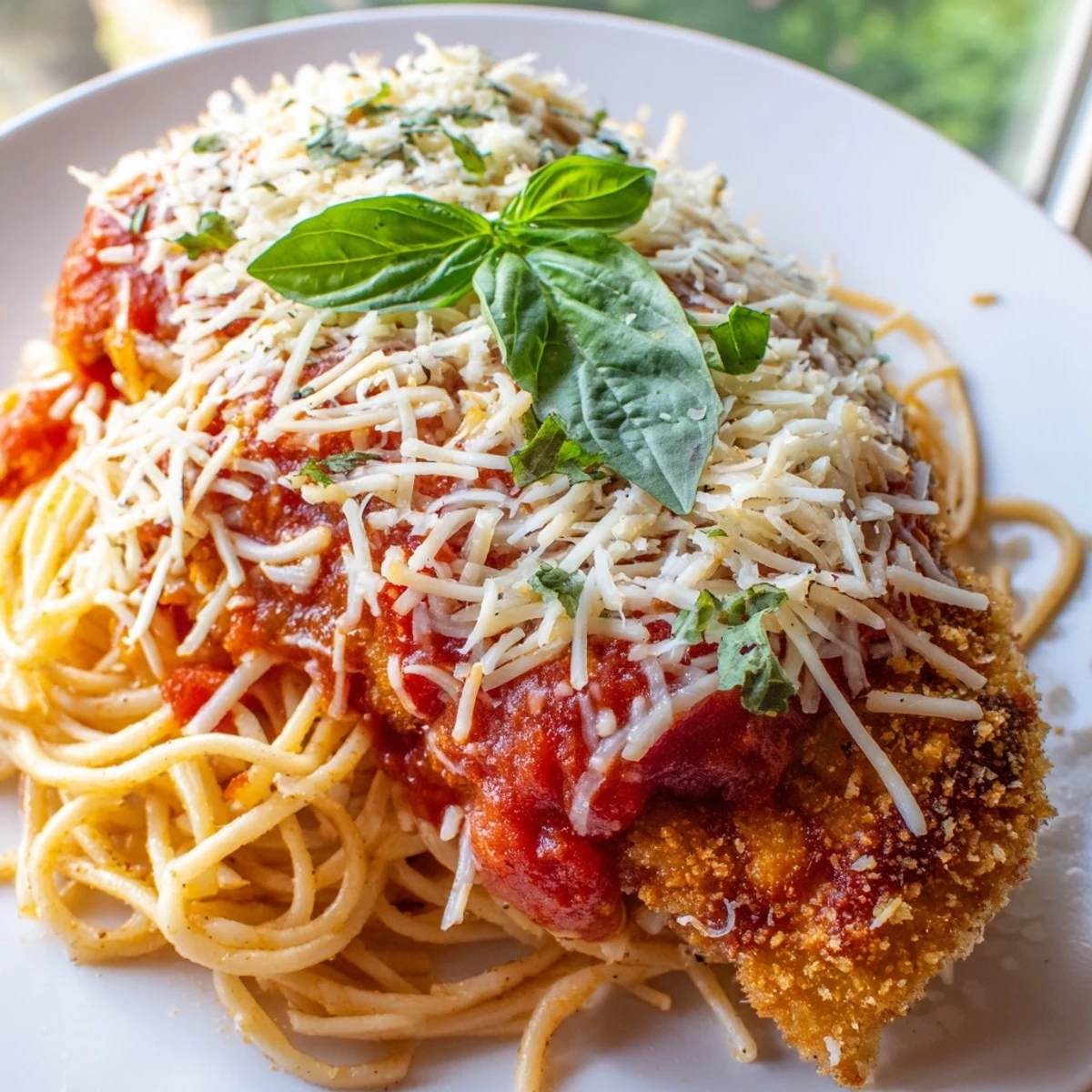
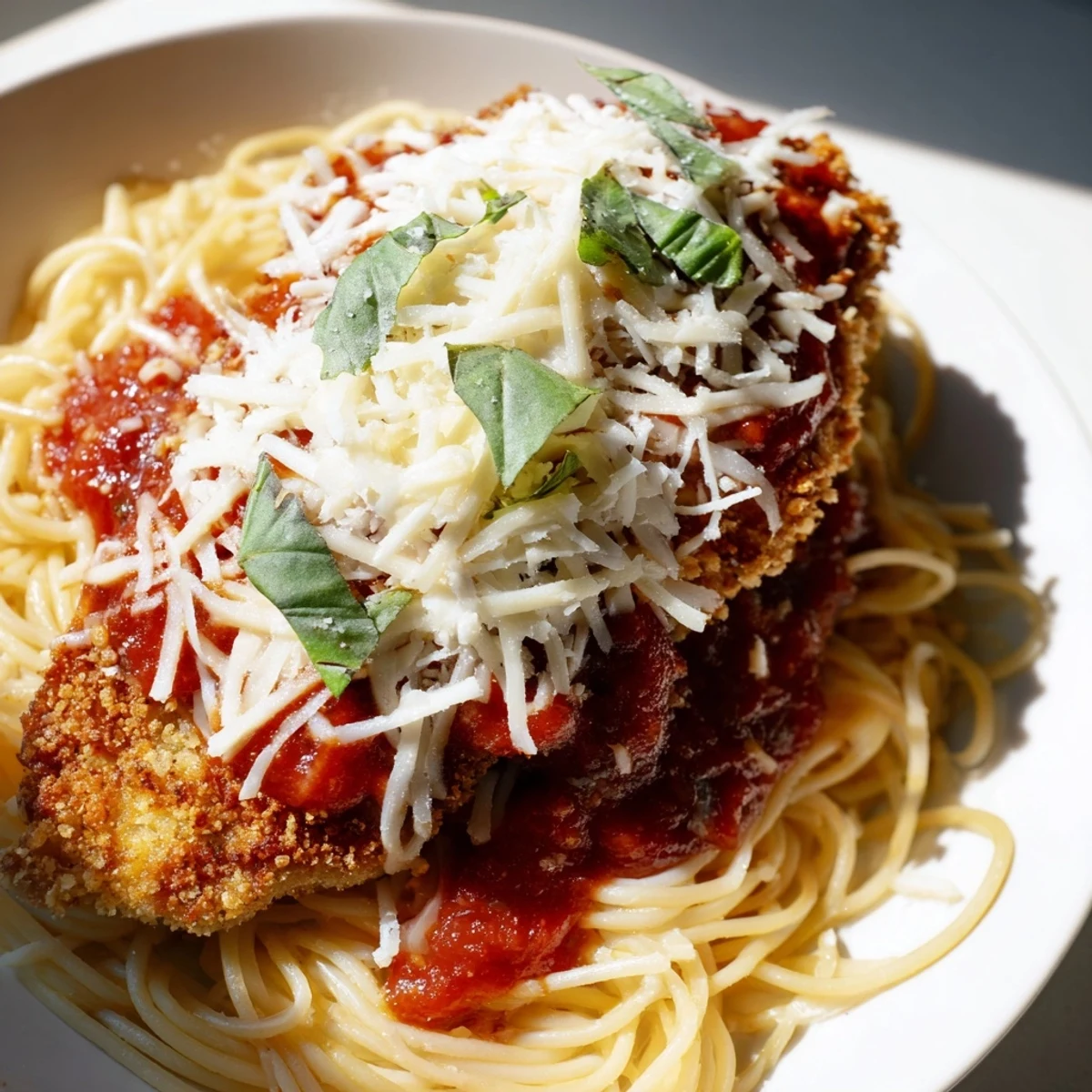
- Divide cooked spaghetti among plates, spoon marinara sauce over the pasta, place a chicken breast on top, and garnish with fresh basil and extra Parmesan if you have it.
 Épingler
 I learned the hard way that rushing through the breading process leads to sad, bare patches of chicken. More importantly, I discovered that this dish is worth the three-bowl mess because the payoff is real. It's comfort food that doesn't apologize for being what it is.
The Secret of the Crispy Crust
The magic isn't in some hidden ingredient—it's in the method and the respect you pay to temperature. When the oil is truly ready, the breadcrumb coating seals immediately, locking moisture inside while the outside gets golden and crisp. I've tried shortcuts, and they always show. The chicken breasts taste better when you take the two minutes to do the breading station properly instead of mixing everything in one bowl.
Why Homemade Marinara Changes Everything
Store-bought sauce has its place, but spending fifteen minutes simmering garlic, onion, and tomatoes creates something that tastes less like a shortcut and more like intention. The smell alone tells you something good is happening. Homemade sauce also gives you control—you can taste it and adjust the salt, the sweetness, the balance, which is something a jar can never offer.
Making It Work for You
This recipe is flexible enough to bend without breaking. I've added fresh spinach under the cheese, used panko breadcrumbs for extra crunch, and even tried baking the breaded chicken instead of frying when I wanted something lighter. Each version tastes different but still feels like itself. The bones of the dish are strong enough to hold whatever small changes you want to make.
- For a lighter version, skip the frying and bake the breaded chicken at 400°F for twenty minutes instead.
- Gluten-free breadcrumbs and pasta work beautifully if you need to accommodate dietary restrictions.
- A crisp Italian white wine or light red like Chianti pairs perfectly and makes the whole meal feel a little more special.
 Épingler
 This dish is proof that simple food, made with care, becomes the meals people remember. Make it often enough, and it stops being a recipe and starts being part of who you are in the kitchen.
Questions fréquentes sur la recette
- → Comment obtenir un poulet bien croustillant ?
-
La clé est de bien fariner le poulet avant de le tremper dans l'œuf et la chapelure au parmesan. Une friture rapide à la poêle scelle la croûte avant de passer au four pour faire fondre le fromage.
- → Puis-je cuisiner ce plat sans friture ?
-
Absolument. Pour une version plus légère, placez les filets panés sur une plaque de cuisson et badigeonnez-les d'un peu d'huile d'olive avant de cuire directement au four jusqu'à ce qu'ils soient dorés.
- → Quel type de fromage utiliser ?
-
Le fromage mozzarella râpé est essentiel pour son fondant, tandis que le parmesan ajouté à la chapelure et sur le dessus apporte la saveur umami caractéristique du Parmigiana.
- → Comment conserver les restes ?
-
Gardez le poulet et les pâtes séparés dans des contenants hermétiques au réfrigérateur. Réchauffez le poulet au four pour conserver sa croustillance plutôt qu'au micro-ondes.
- → Peut-on préparer la sauce à l'avance ?
-
Oui, cette sauce marinara maison se conserve parfaitement au réfrigérateur pendant quelques jours. Elle sera même meilleure après avoir eu le temps de laisser ses arômes se développer.