
 Épingler
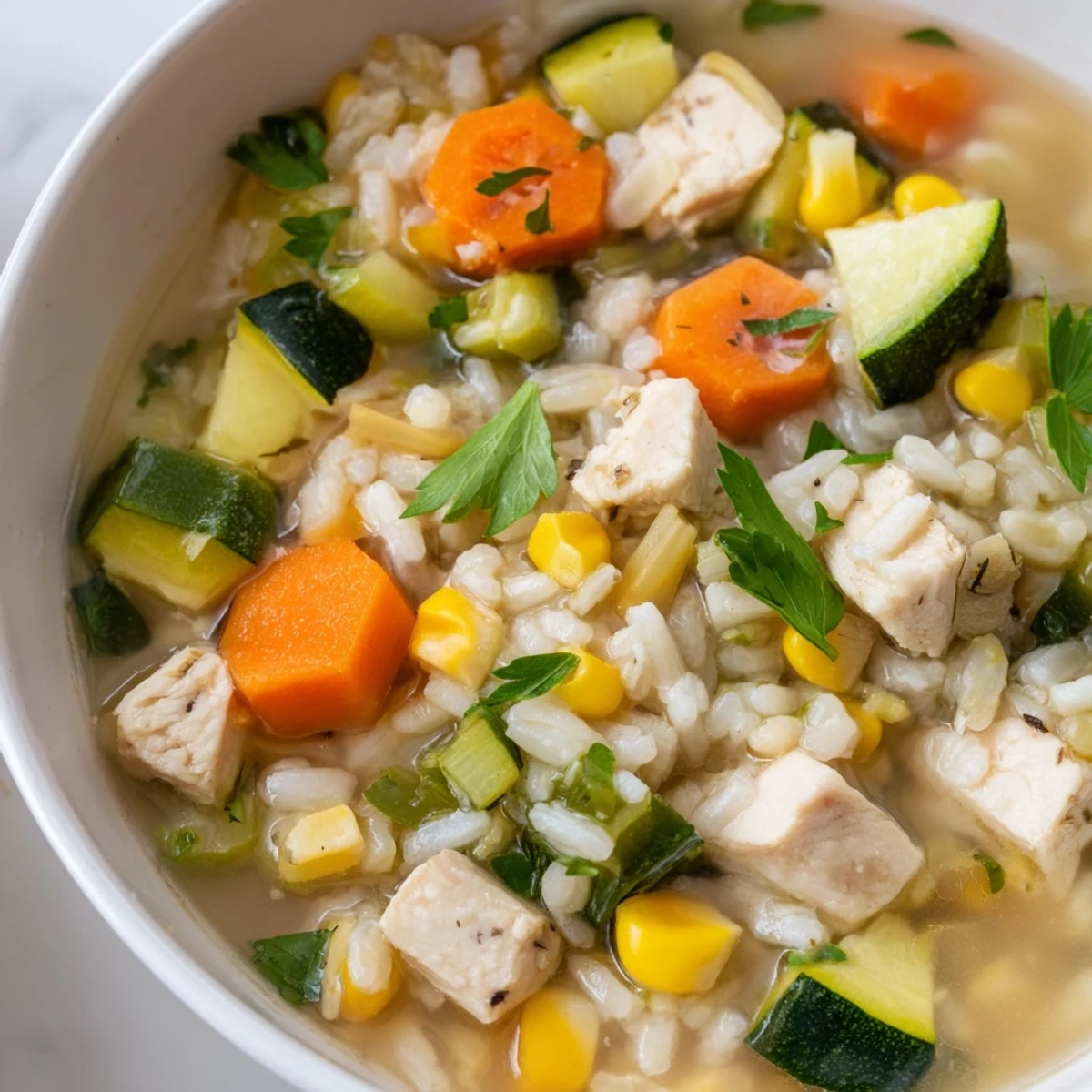
 Ce velouté associe poulet tendre, légumes colorés et riz moelleux dans un bouillon parfumé. Facile à préparer, il mijote lentement pour que les saveurs se développent pleinement. Parfait pour une journée fraîche, ce plat complet apporte chaleur et nutrition grâce à sa riche combinaison d'ingrédients frais et d'épices délicates. Il se sert chaud, idéalement garni de persil frais pour une touche de fraîcheur.
There's something about a pot of chicken vegetable soup simmering on the stove that turns an ordinary Tuesday into something almost sacred. I discovered this particular combination on a gray afternoon when my fridge was nearly empty except for chicken, rice, and whatever vegetables I could find in the crisper drawer. The smell that filled my kitchen while it cooked convinced me I'd stumbled onto something worth repeating, and now it's become the soup I reach for whenever I need both comfort and substance.
I made this for my sister one winter when she was feeling run down, and watching her eat a full bowl with actual enthusiasm reminded me why I love cooking for people. She kept asking what was in it, convinced I'd added something fancy, but it was just the simple combination of chicken, vegetables, and time that did the work.
Ingredients
- Chicken breasts: Diced into bite-sized pieces that cook quickly and stay tender in the broth.
- Carrots: They release their natural sweetness as they soften, balancing the savory broth beautifully.
- Celery: The backbone of soup flavor, working quietly in the background to build depth.
- Onion: Chopped fine so it dissolves into the broth and carries the umami flavor forward.
- Garlic: Added after the softer vegetables because it burns easily and loses its sweet edge if cooked too long.
- Zucchini: A lighter vegetable that adds bulk without heaviness; it breaks down slightly and becomes almost creamy.
- Green beans: Cut into short pieces so they're easy to eat with a spoon and stay slightly crisp.
- Corn and peas: Frozen is fine here and honestly saves you work; they add sweetness and color without needing fresh versions.
- Long-grain rice: Rinsed to remove excess starch so it stays fluffy instead of turning the broth cloudy.
- Chicken broth: Low-sodium lets you control the salt level and taste the actual ingredients instead of just salt.
- Olive oil: Just enough to coat the pan and prevent sticking without making the soup greasy.
- Thyme and parsley: Dried herbs work fine and won't overpower; fresh parsley as a garnish adds a bright finish if you have it.
- Bay leaf: A single leaf imparts gentle herbaceous notes that disappear once you remove it.
Instructions
- Sauté the foundation:
- Heat the olive oil in your pot and add the onion, carrots, and celery together. Listen for the gentle sizzle and let them soften for about 5 minutes, stirring occasionally so nothing catches on the bottom.
- Wake up the garlic:
- Add the minced garlic and stir for just one minute until the smell becomes unmistakable and fragrant. This is the moment you know things are happening.
- Begin with the chicken:
- Add your diced chicken and let it brown slightly on all sides, which takes about 3 to 4 minutes of occasional stirring. The chicken doesn't need to be cooked through because it will finish cooking in the broth.
- Build the soup:
- Add the zucchini, green beans, rinsed rice, chicken broth, thyme, parsley, and bay leaf all at once. Stir to combine and bring the whole pot to a boil, which should take about 5 minutes.
- Let it simmer:
- Lower the heat, cover the pot, and let everything bubble gently for 20 minutes. The rice will absorb the flavors of the broth while the vegetables become tender.
- Finish with brightness:
- Add the corn and peas, stir, and simmer uncovered for another 10 to 15 minutes until the rice is completely tender and the vegetables yield easily to a spoon.
- Season and serve:
- Remove the bay leaf, taste the soup, and adjust salt and pepper until it feels right to you. Ladle it into bowls and add a sprinkle of fresh parsley if you have it.
 Épingler
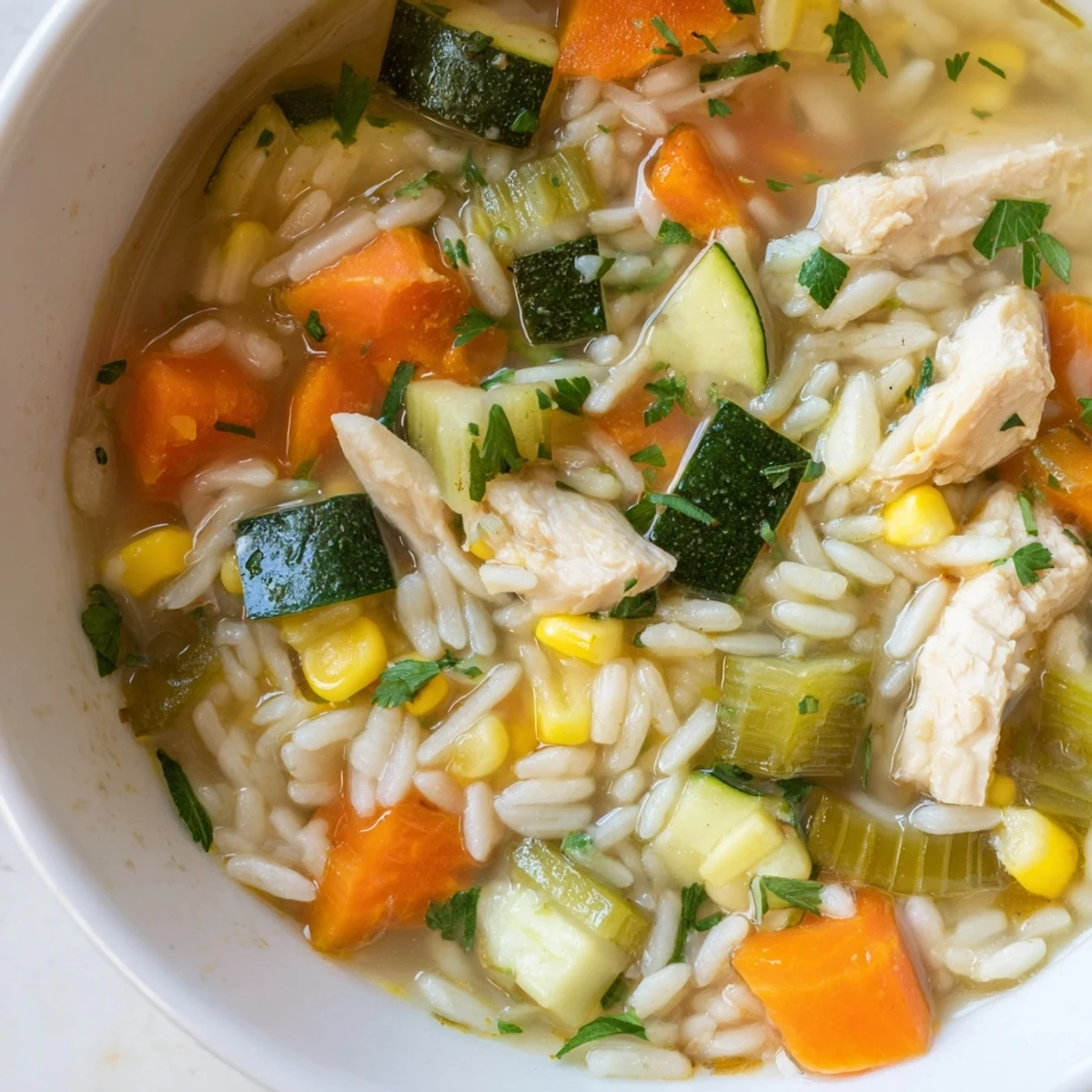
 Years ago, my grandmother told me that a good soup is patient cooking done fast, and this one proved her right. There's magic in how 40 minutes transforms raw ingredients into something that tastes like it's been tended for hours.
Why This Soup Feels Like Home
Chicken vegetable soup exists in that beautiful middle ground between something you make when you're genuinely hungry and something you make to take care of someone else. It never feels too fussy, yet it's substantial enough that you're satisfied when you're done. The rice especially transforms it from being just a broth into a complete meal that stands on its own.
Making It Your Own
One of the reasons I come back to this recipe is how forgiving it is about substitutions. I've made it with whatever vegetables were in my kitchen, swapped the rice for orzo pasta, and even used rotisserie chicken on nights when I was too tired to cook raw poultry. Brown rice works if you have it and adds a nuttier flavor, though it needs about 10 extra minutes of simmering. A squeeze of lemon juice at the very end brightens everything, and a handful of spinach stirred in at the last minute adds color and a hint of earthiness.
Serving and Storage
This soup is best served piping hot in wide bowls with a good crusty bread for soaking up the broth. Leftovers actually improve in flavor as the ingredients continue to meld together, making it even better the next day. It keeps in the refrigerator for up to four days and freezes beautifully for up to three months.
- Reheat gently on the stovetop over medium heat, adding a splash of water if the soup has thickened too much.
- Serve with fresh parsley scattered on top for brightness and a reminder that you made something homemade.
- Pair with crusty bread to turn a bowl of soup into an actual meal.
 Épingler
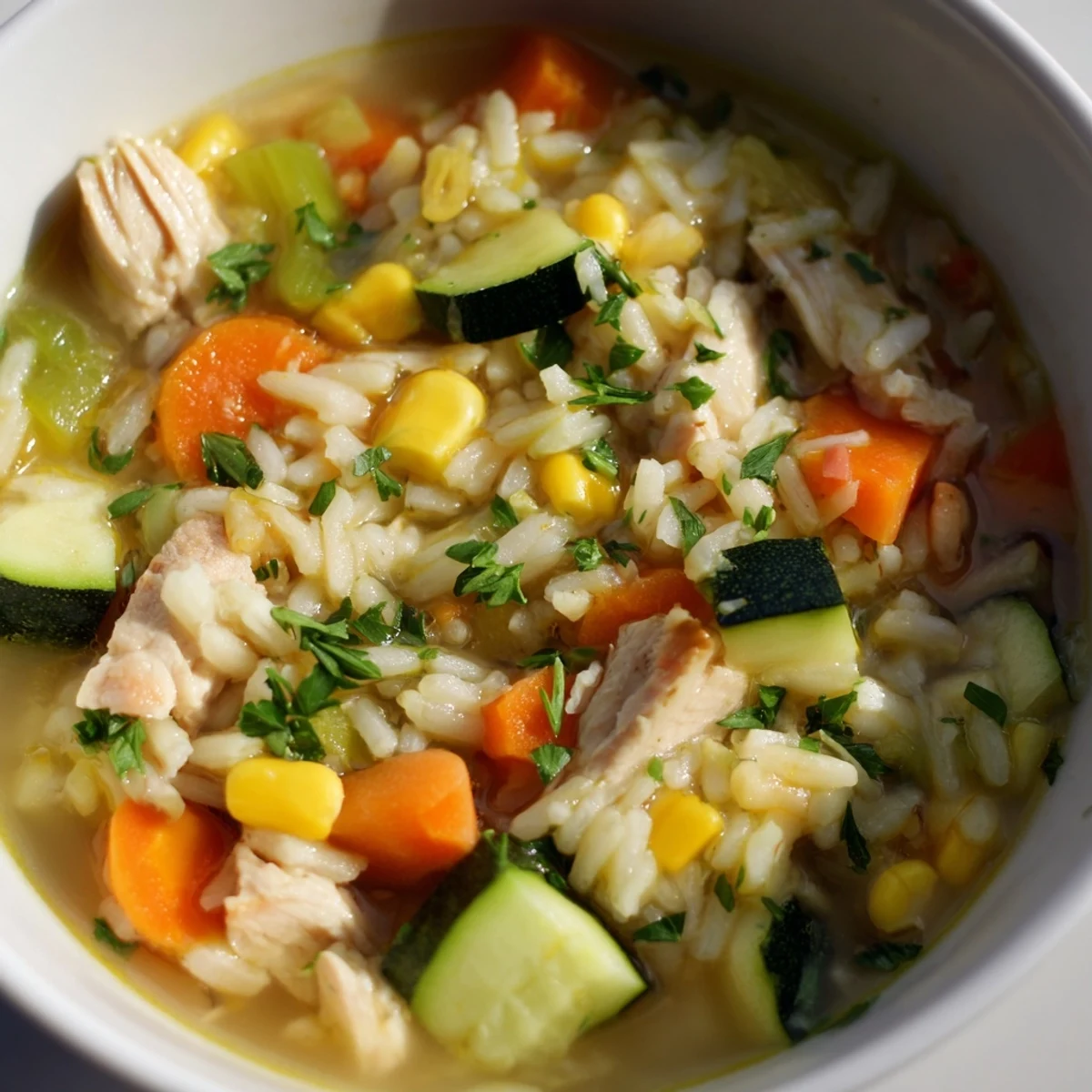
 This soup has become my answer to almost everything: when someone's sick, when I need comfort food that isn't heavy, when I'm cooking for people I care about. It's proof that good food doesn't require fancy techniques, just attention and intention.
Questions fréquentes sur la recette
- → Quels légumes sont utilisés dans ce plat ?
-
Il inclut carottes, céleri, oignon, courgette, haricots verts, maïs et petits pois, apportant textures et saveurs variées.
- → Peut-on remplacer le riz blanc ?
-
Oui, du riz complet peut être utilisé en allongeant le temps de cuisson de 10 minutes pour une texture parfaite.
- → Comment obtenir une saveur plus riche ?
-
Utiliser des morceaux de poulet avec os et enlever les os après cuisson améliore la profondeur du bouillon.
- → Quelles épices agrémentent ce plat ?
-
Thym séché, persil frais ou séché et une feuille de laurier donnent des arômes doux et équilibrés.
- → Comment garantir la tendreté du poulet ?
-
Le poulet est légèrement saisi avant d'être mijoté, ce qui permet de préserver sa texture délicate tout au long de la cuisson.