 Épingler
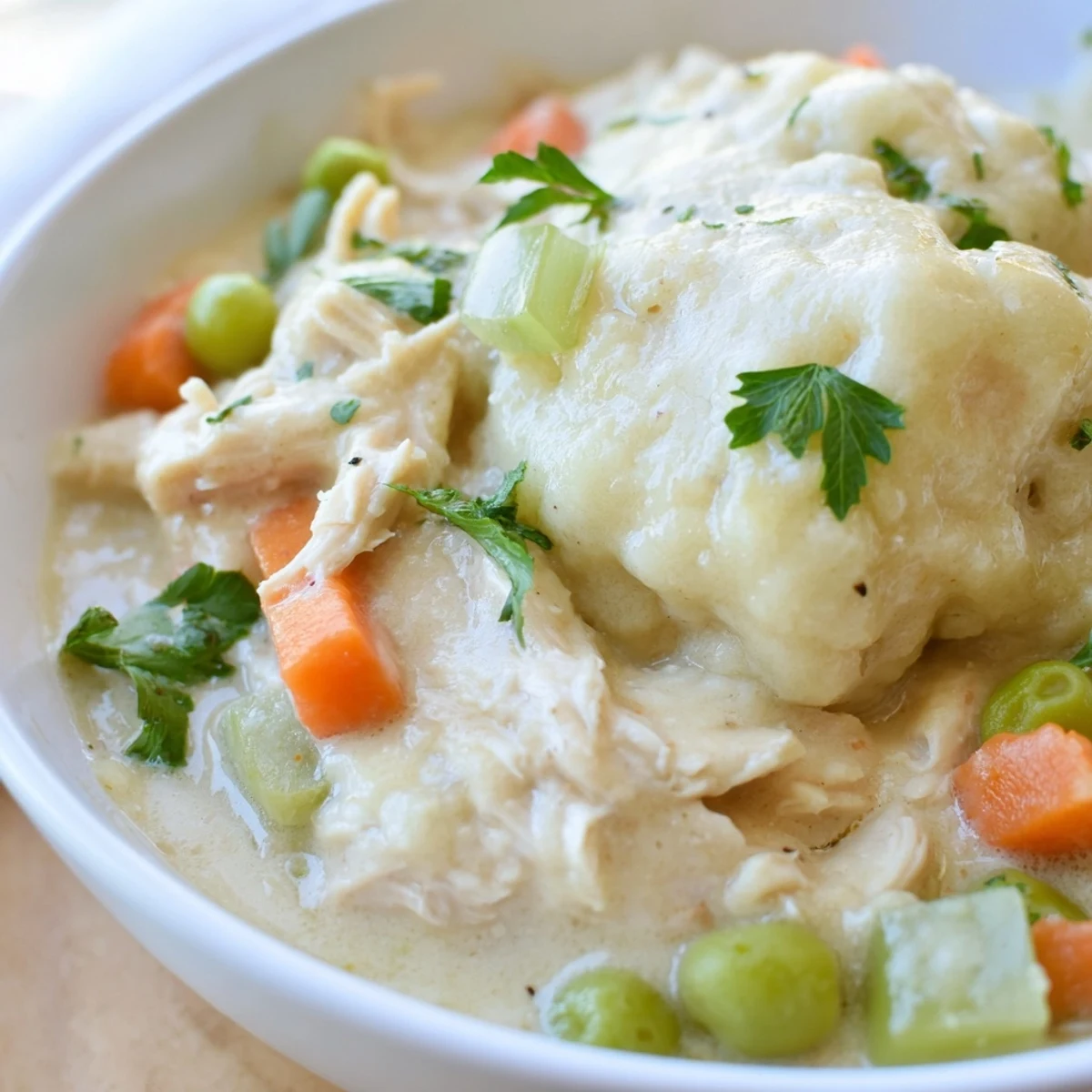
 Ce plat simple et convivial marie une viande tendre avec des légumes variés, le tout mijoté lentement pour développer des arômes riches et harmonieux. La pâte légère, délicatement posée sur le mélange, gonfle et apporte une texture moelleuse, complétant parfaitement la sauce crémeuse. Idéal pour les soirs frais, ce plat offre une sensation de confort et de réconfort grâce à ses ingrédients doux et savoureux.
My kitchen was cold that November afternoon when I realized I'd been craving something warm, something that would fill the house with the kind of smell that makes you want to stay home. I'd been planning to make slow cooker chicken and dumplings for days, ever since my neighbor mentioned hers always turned out perfectly tender. There's something magical about letting a dish do most of the work while you go about your day, checking on it just once or twice. By the time those fluffy dumplings floated to the surface, I understood why this recipe had become a quiet comfort in so many homes.
I made this last winter for my sister right after she moved into her first apartment, and watching her face when she tasted it told me everything. She'd been living on takeout for weeks, so the idea that she could create something this comforting herself seemed to shift something. Now whenever she's had a rough day, she texts me a photo of her slow cooker with "making that chicken thing" in the message. That's when I knew this recipe had become more than just dinner—it was something she could give herself.
Ingredients
- Boneless, skinless chicken thighs or breasts (1.5 lbs): Thighs stay more tender after hours of cooking, but breasts work fine if that's what you have—don't stress over it.
- Low-sodium chicken broth (4 cups): Low-sodium lets you control the salt and keeps the broth from getting too intense as it reduces.
- Unsalted butter (2 tbsp, plus 2 more for dumplings): Unsalted gives you control, and cold butter dotted on top creates little pockets of richness.
- Onion, carrots, and celery (1 medium, 3 medium, 2 stalks): This is the flavor foundation—don't skip the garlic either, as those three cloves add depth that nothing else can replace.
- Dried thyme, parsley, and rosemary (1 tsp, 1 tsp, 1/2 tsp): These three herbs together create that classic, almost cozy warmth that makes people ask what your secret is.
- Heavy cream (1/2 cup): This turns everything silky and luxurious; I learned the hard way that skim milk doesn't deliver the same comfort.
- All-purpose flour (1/4 cup for sauce, 1 cup for dumplings): The flour thickens the sauce and makes the dumplings fluffy—don't use self-rising flour for the dumplings or they'll spread too much.
- Frozen peas (1 cup): Frozen peas are actually better than fresh here since they stay intact and add a bright sweetness at the end.
- Baking powder (1.5 tsp) and milk (1/2 cup) for dumplings: Baking powder is what gives those dumplings their cloud-like texture; it's the whole reason they puff up.
Instructions
- Build your slow cooker base:
- Add the chicken, onion, carrots, celery, garlic, and all your herbs and seasonings to the slow cooker. Pour in the broth and dot the top with butter—those little butter pieces will melt and add richness as everything cooks. I always give it a quick stir to make sure nothing's stuck to the bottom.
- Let time do the work:
- Cover and cook on low for 5 hours until the chicken is fall-apart tender. You'll notice the house starting to smell amazing around hour three—that's when you know it's working.
- Shred and thicken:
- Pull the chicken out carefully and shred it between two forks, then return it to the pot. Whisk the flour and heavy cream together in a bowl until completely smooth before stirring it in—lumpy cream sauce is sadness in a bowl.
- Add the peas and make the dumpling dough:
- Stir the peas into the creamy mixture. In another bowl, combine the dumpling flour, baking powder, and salt, then stir in melted butter and milk until just barely combined—overmixing makes tough dumplings, so stop while it's still a little lumpy.
- Crown it with dumplings:
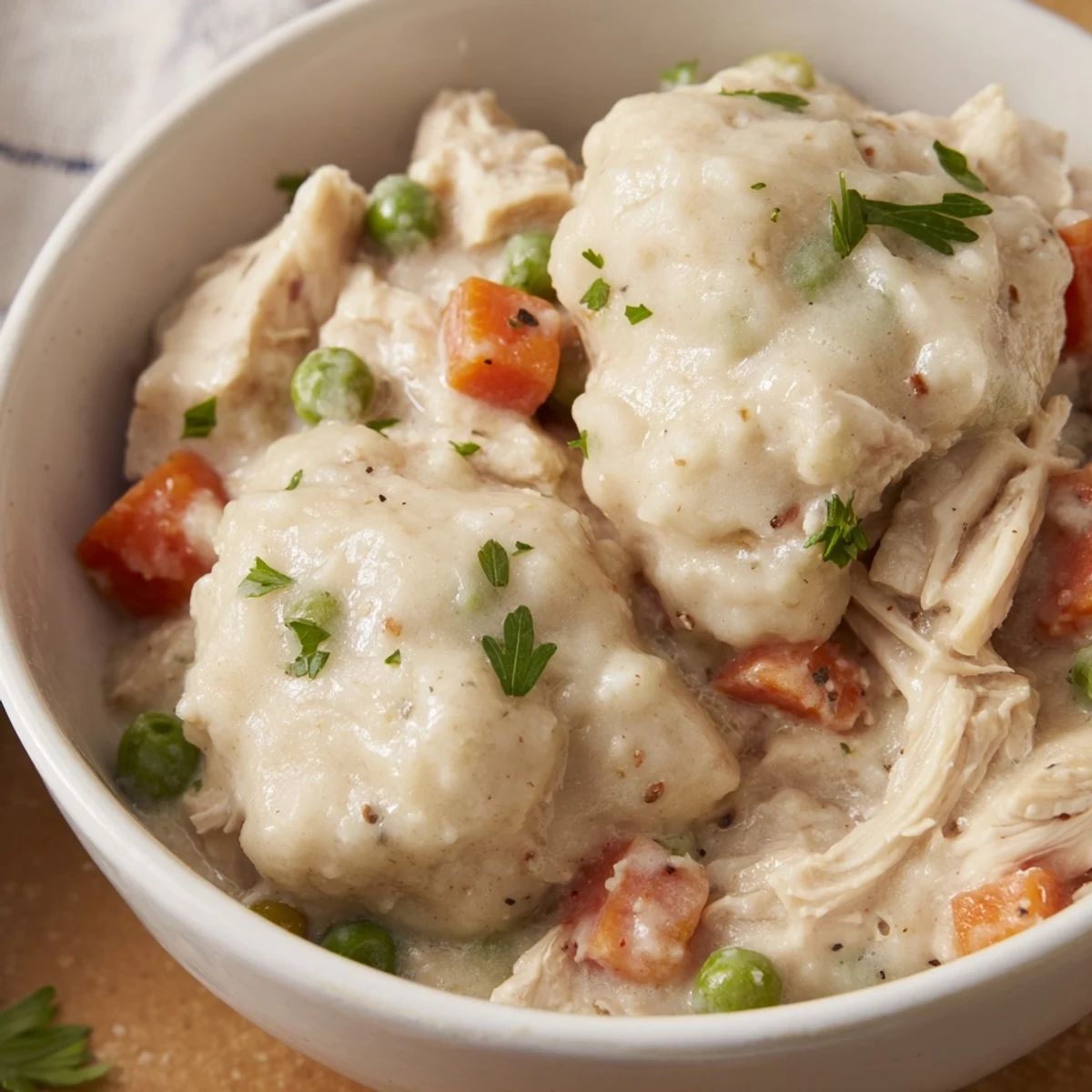
- Drop tablespoon-sized dollops of dumpling dough across the top of your stew—you should get about 10 to 12. Don't stir them in; let them sit on top where they'll steam and puff.
- The final cook:
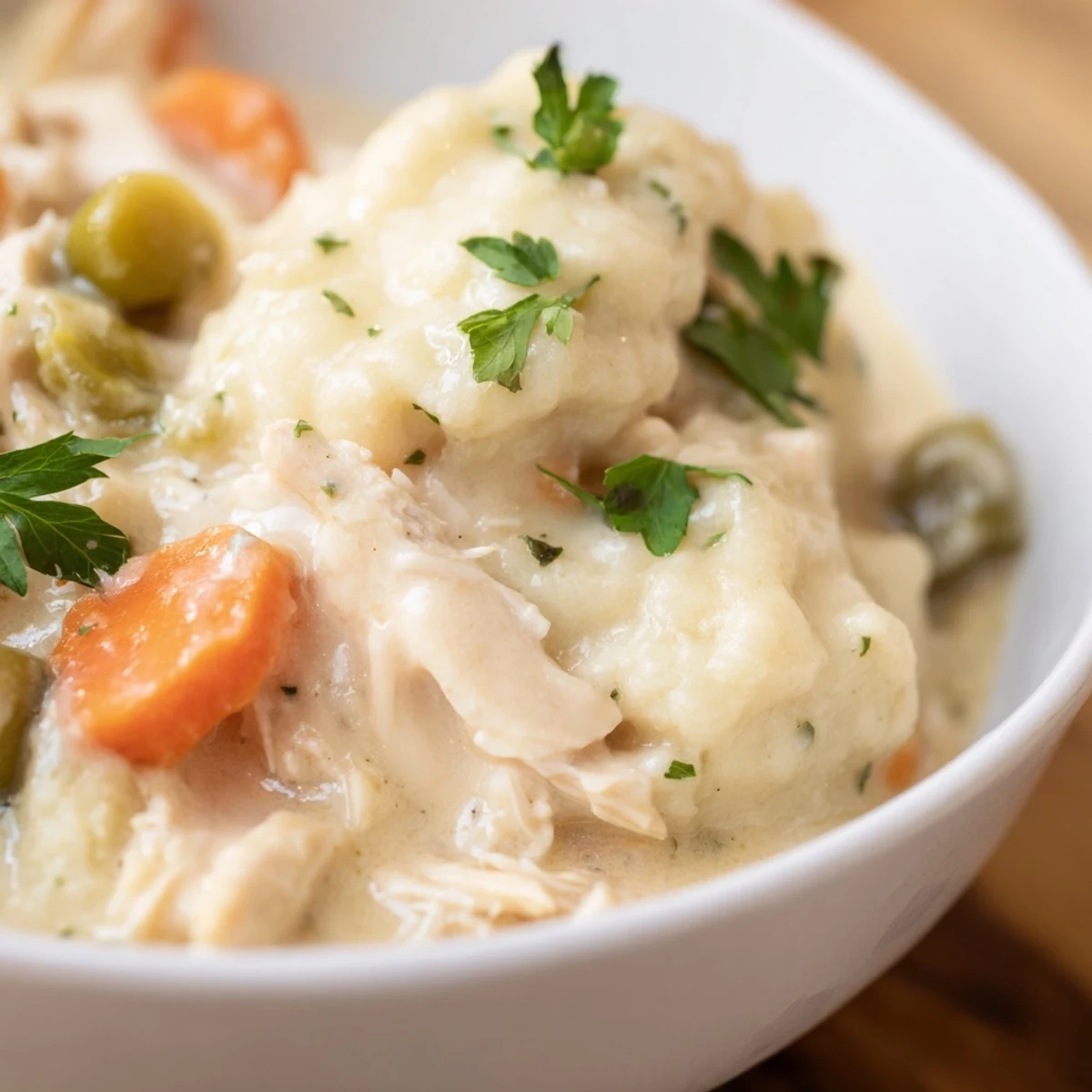
- Cover and cook on high for 1 more hour until the dumplings are puffy and cooked through. They'll look like pillows floating on top, and that's exactly right.
- Taste and adjust:
- Give it a final seasoning check—a little more salt or pepper can wake everything up if needed.
 Épingler
 Years ago, a friend came to my house unexpectedly heartbroken, and I had nothing in my freezer but frozen peas and chicken broth. By the time the slow cooker had done its work, she wasn't quite fixed, but she was sitting at my table eating something warm that I'd made. She never mentioned why she came over, and I never asked, but that bowl of chicken and dumplings said what words couldn't. That's when comfort food stopped being about ingredients and started being about showing up for someone.
The Slow Cooker Advantage
There's a particular kind of peace in knowing your dinner is already half done before you've finished your first cup of coffee. I used to stress about timing everything to come together, but this recipe taught me that sometimes the best meals are the ones you start early and then forget about. The long, gentle heat transforms tough cuts into silky tenderness and lets all the flavors marry into something deeper than the sum of its parts. You're not actually cooking—you're just giving the dish time to become itself.
Variations and Substitutions That Work
I've made this same recipe with turkey thighs, with store-bought rotisserie chicken (added near the end, not at the beginning), and even with leftover cooked chicken. Each time it's slightly different but unmistakably itself. Once I used half-and-half instead of heavy cream because that's all I had, and it was lighter and still delicious—the dish adjusted gracefully. My neighbor swears by adding a bay leaf and a pinch of smoked paprika, and while I'm protective of the original, I can't argue that her version is beautiful too.
Making It Your Own in the Kitchen
The first time I made this, I was so focused on following every instruction that I missed the whole point of cooking—which is trust and intuition. Now I make it with fresh herbs when they're in season, add extra mushrooms when I'm feeling decadent, or double the dumplings because I love them. The recipe isn't precious; it's a foundation. Once you've made it a couple of times and felt how the flavors work together, you'll naturally start adjusting it to match what your kitchen and your mood are asking for.
- A bay leaf added with the broth brings an almost herbal depth, but remember to fish it out before serving.
- Fresh parsley stirred into the dumplings makes them taste bright and garden-like, especially in spring.
- If you're making this the next day, the sauce thickens as it cools—add a little broth or cream when you reheat to loosen it.
 Épingler
 This dish has sat on tables at graduations and breakups, at quiet Sunday dinners and rushed weeknight recoveries. It's the kind of recipe that asks nothing from you but patience, and in return, it fills your house with warmth and your belly with something real.
Questions fréquentes sur la recette
- → Quels légumes sont utilisés dans ce plat ?
-
Des carottes, du céleri et de l'oignon apportent douceur et fraîcheur, enrichissant les saveurs du poulet.
- → Comment obtenir une pâte moelleuse ?
-
En mélangeant farine, levure chimique, beurre fondu et lait, puis en déposant des petites portions directement sur la préparation avant la cuisson finale.
- → Peut-on utiliser un autre type de viande ?
-
Oui, la dinde ou du poulet rôti conviennent aussi, en ajustant légèrement le temps de cuisson pour préserver la tendreté.
- → Quelle est la durée totale de cuisson ?
-
Environ 6 heures 20 minutes, avec une cuisson lente pour attendrir la viande et une finition pour cuire les douillons.
- → Comment parfumer davantage le plat ?
-
Ajouter une feuille de laurier dans le bouillon et utiliser des herbes fraîches comme le persil et le thym pour relever le goût.