
 Épingler
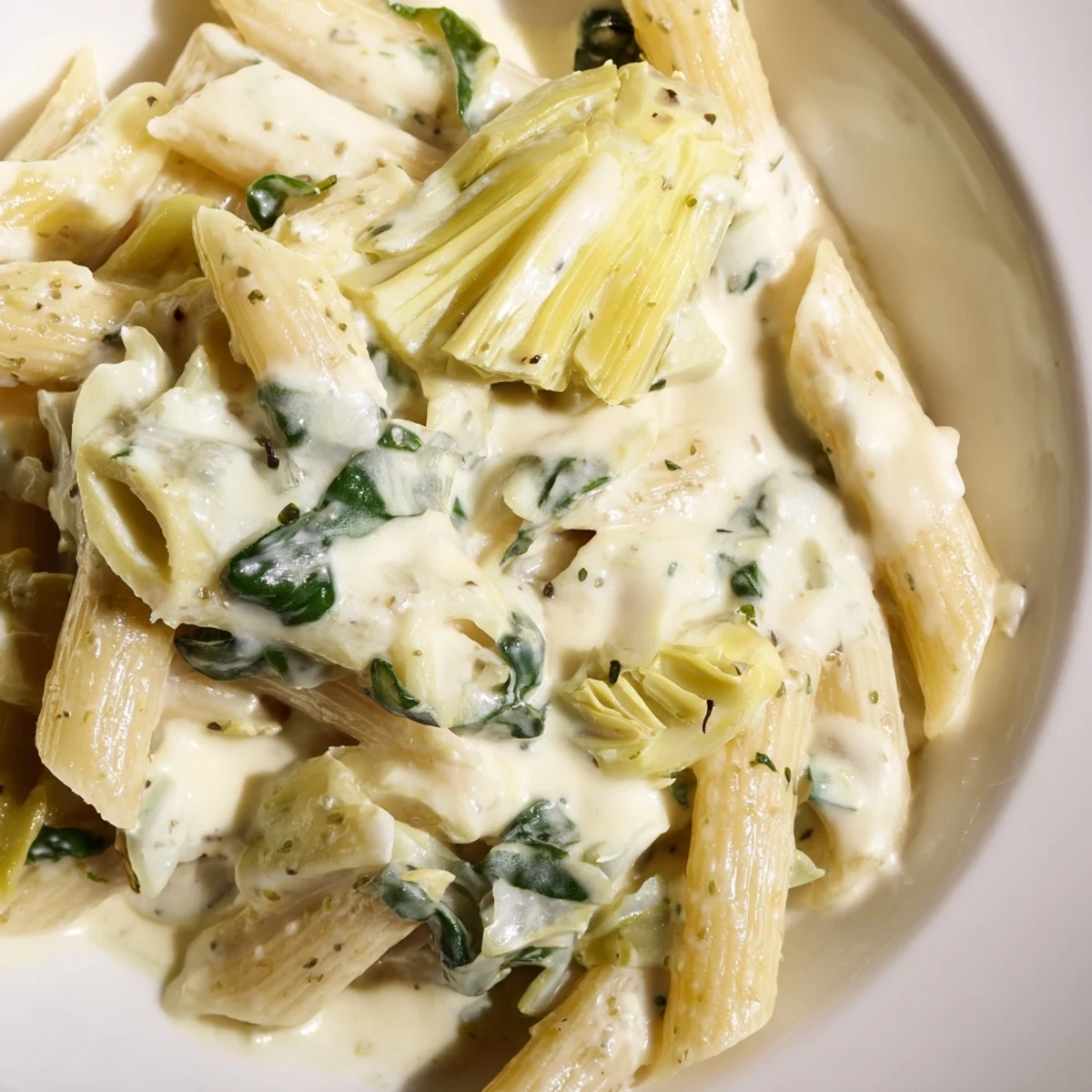
 Découvrez un plat simple et savoureux associant penne al dente à une sauce riche et douce. Les épinards légèrement sautés s’unissent aux cœurs d’artichauts tendres pour un équilibre parfait de textures. La sauce crémeuse, parfumée à l’ail, au parmesan et à la pointe de muscade, enveloppe généreusement chaque pâtes. Ce plat végétarien convivial se prépare rapidement et offre un repas chaud et réconfortant, idéal pour un soir de semaine.
There's something about the smell of garlic hitting hot oil that makes you feel like you're about to create something special. I stumbled onto this creamy spinach and artichoke penne on a random Tuesday when I had exactly these ingredients on hand and no real plan. Twenty minutes later, I had a dish so silky and satisfying that it became my go-to comfort meal whenever I needed something that felt restaurant-quality but actually lived in my weeknight rotation.
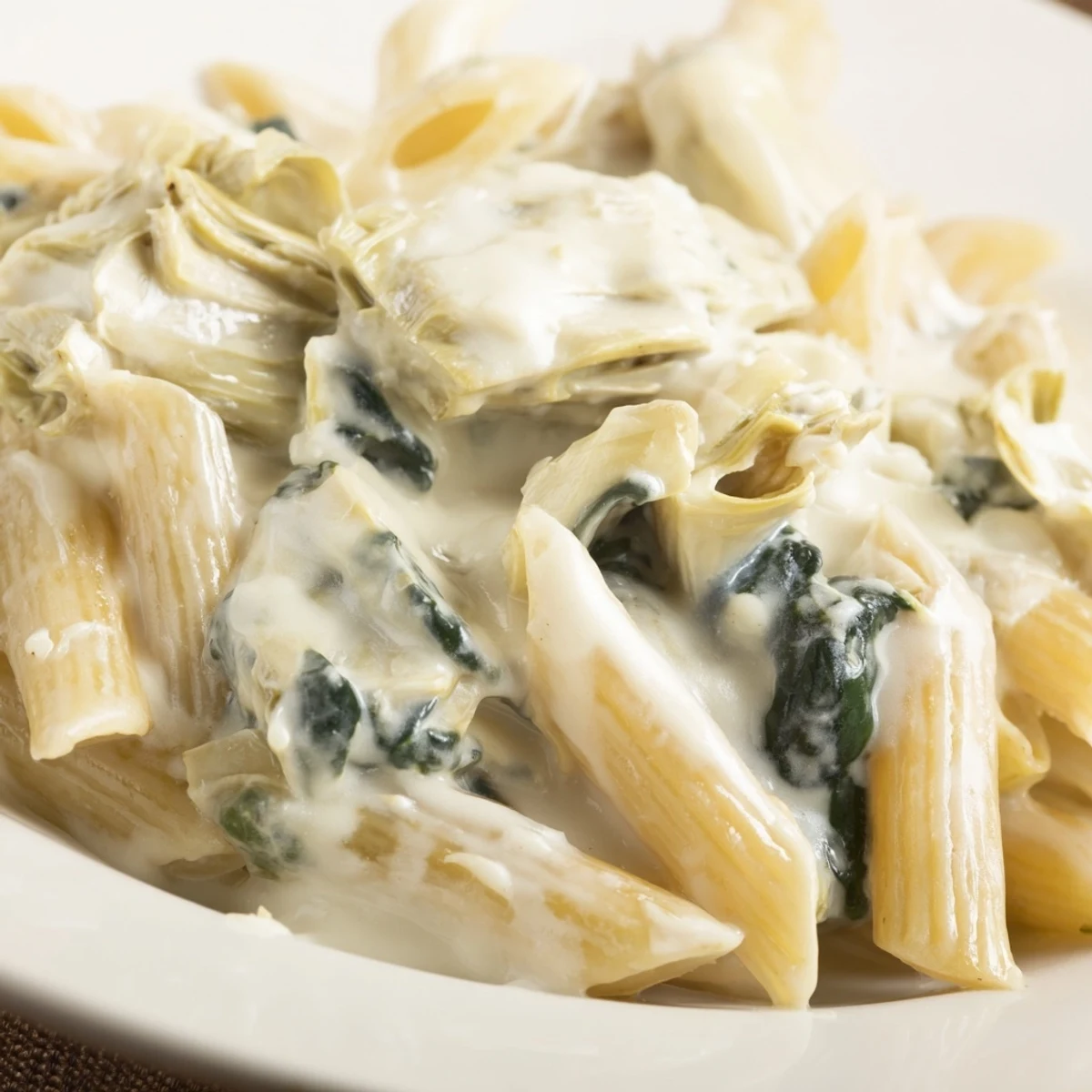
I made this for my partner one evening when they'd had a particularly rough day at work, and watching their face light up at that first bite told me everything I needed to know. The pasta was soft but not mushy, the sauce draped over every piece like velvet, and somehow this simple combination of vegetables felt like I'd spent hours in the kitchen when really I'd barely broken a sweat.
Ingredients
- Penne pasta (350 g): The tube shape is crucial here because it traps the creamy sauce inside and in the ridges, so you get that sauce in every bite rather than it just coating the outside.
- Olive oil (2 tablespoons): Use something you actually like tasting because it's doing real work here in drawing out the garlic's sweetness.
- Garlic (3 cloves, minced): Don't skip the mincing step or use pre-minced—fresh garlic cloves mince in about 30 seconds and taste infinitely better.
- Fresh spinach (150 g): The roughly chopped kind, which wilts down to almost nothing and becomes this silky addition to the cream.
- Artichoke hearts (1 can, 400 g): Drained and quartered so they break into manageable pieces that feel like little treasure throughout the dish.
- Heavy cream (250 ml): This is what gives the sauce its personality; don't get tempted to cut corners here.
- Parmesan cheese (120 g, grated): Freshly grated makes a genuine difference in how smoothly it melts and how bright the flavor stays.
- Cream cheese (120 g, softened): The secret to a sauce that's velvety without being heavy; it melts seamlessly into the vegetables.
- Lemon zest (1 teaspoon): Just enough brightness to cut through all that richness and remind you of what you're eating.
- Ground nutmeg (1/4 teaspoon): Barely a whisper, but it adds a warmth that makes people ask what that subtle something is in the background.
Instructions
- Get the pasta going:
- Fill a large pot with salted water and let it come to a rolling boil while you prep everything else. Add the penne and cook until al dente—which means it should have a tiny bit of resistance when you bite it, not soft all the way through. Drain it in a colander but keep about half a cup of that starchy cooking water because it's going to help loosen the sauce later.
- Build the flavor base:
- Heat your olive oil in a large skillet over medium heat and add the minced garlic. Let it sizzle and become fragrant for about a minute, and pay attention because you want it golden and sweet, not brown and bitter. This is where the foundation of the whole dish gets built.
- Wilt and combine the vegetables:
- Add the spinach to that fragrant oil and let it collapse down, stirring occasionally, which takes about two minutes. Once it's wilted, add your drained artichoke hearts and let everything hang out together for another couple of minutes so the flavors get acquainted.
- Create the creamy base:
- Lower your heat to medium-low and add the softened cream cheese, stirring it through the vegetables until it's melted and everything is combined into one cohesive mixture. It should look smooth and slightly glossy at this point.
- Build the sauce:
- Pour in the heavy cream, the freshly grated parmesan, the lemon zest, and the nutmeg, stirring constantly. You'll watch the sauce come together over the next few minutes, becoming smooth and thickened as the parmesan melts and everything emulsifies. This is genuinely satisfying to watch.
- Bring it all together:
- Taste the sauce and adjust the salt and pepper because these are your controls for making the whole thing taste like exactly what you want. Add the drained penne to the skillet and toss everything together until every piece of pasta is coated in that silky sauce. If it seems too thick, add a splash of that reserved pasta water to loosen it.
- Serve with confidence:
- Transfer to bowls or plates while it's still hot, and finish each serving with a generous sprinkle of fresh parmesan and cracked black pepper.
 Épingler
 I realized one night while eating this alone at my kitchen counter that comfort food doesn't require an audience or an occasion—sometimes you make it just because you deserve something that tastes like somebody cares. That's what this dish became for me.
Why This Dish Feels Restaurant-Quality
The trick to making something like this taste like it came from a restaurant is in the details that don't sound important until you do them. Using cream cheese alongside heavy cream creates a sauce with an almost champagne-like smoothness that you'd struggle to achieve with cream alone. The combination of garlic, lemon zest, and just a whisper of nutmeg gives your brain multiple flavor signals, making it register as complex and sophisticated even though you're basically just tossing pasta with vegetables and cream. Freshly grated parmesan melts into the sauce in a way that pre-grated cheese simply cannot because of all the anti-caking agents that prevent it from fully incorporating.
Variations That Work Beautifully
The foundation of this dish is so solid that you can build on it without worrying that you're messing things up. If you want protein, sliced chicken breast or shrimp added right before the final toss creates a completely different meal that still feels cohesive. Swapping half-and-half for the heavy cream gives you something lighter that still tastes creamy because of the cream cheese doing the heavy lifting. You can also play with the vegetables—roasted cherry tomatoes add sweetness and brightness, or a handful of fresh peas stirred in at the last second add texture and color.
The Small Moves That Make the Difference
Sometimes the smallest decisions are what transform a dish from good to something you actually think about days later. Don't skip draining the artichokes well because excess liquid can dilute the sauce, and don't be shy with the lemon zest because it's what prevents everything from feeling one-note and heavy. One thing I learned through making this dozens of times is that how you serve it matters—putting it in a shallow bowl rather than a deep one helps the sauce coat your spoon instead of pooling, which makes each bite better.
- Grate your own parmesan from a block and your sauce will be noticeably smoother and more luxurious.
- If you're cooking for someone with dietary restrictions, this swaps to dairy-free cream and cheese remarkably well without losing its character.
- Make sure your skillet is large enough that you're not cramming everything in, because the pasta needs room to move around and get coated properly.
 Épingler
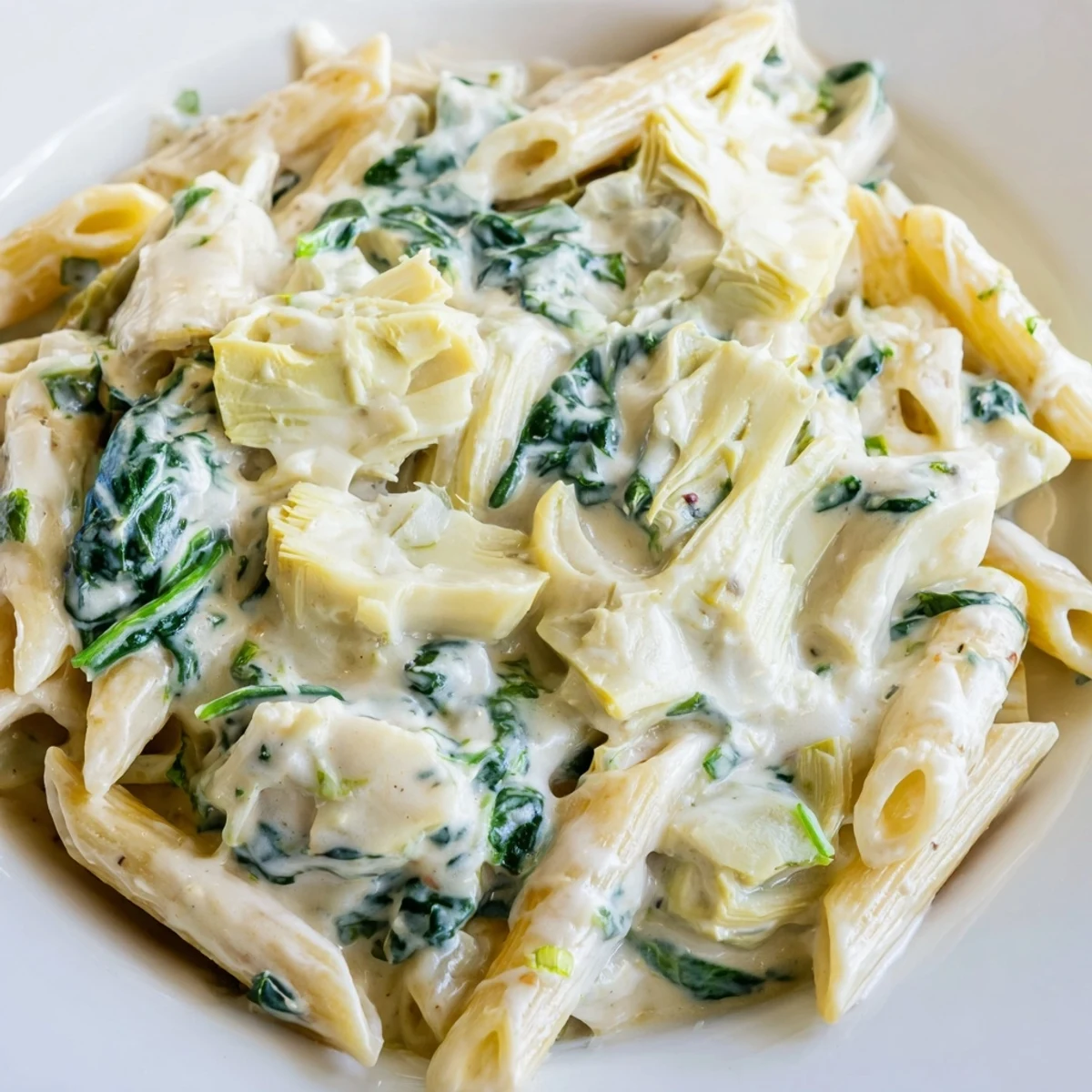
 This is the kind of recipe that quietly becomes essential in your cooking rotation because it never lets you down. Make it tonight and you'll understand why.
Questions fréquentes sur la recette
- → Comment cuire les penne pour qu'ils restent fermes ?
-
Faites cuire les penne dans une grande quantité d'eau salée jusqu'à ce qu'ils soient al dente, généralement 1 à 2 minutes de moins que le temps indiqué sur le paquet.
- → Puis-je utiliser d'autres légumes à la place des épinards ?
-
Oui, des légumes comme le kale ou des feuilles de bette peuvent fonctionner et apporter une touche différente à la texture et au goût.
- → Comment garder la sauce bien crémeuse ?
-
Incorporez la crème et les fromages à feu doux, en remuant continuellement. Ajoutez un peu d'eau de cuisson des pâtes si la sauce devient trop épaisse.
- → Quel vin accompagne bien ce plat ?
-
Un vin blanc sec et léger comme un Pinot Grigio complète bien la douceur de la sauce et la fraîcheur des légumes.
- → Puis-je préparer ce plat à l'avance ?
-
Il est préférable de préparer la sauce à l'avance, mais d'assembler et mélanger les pâtes juste avant de servir pour préserver la texture.