
 Épingler
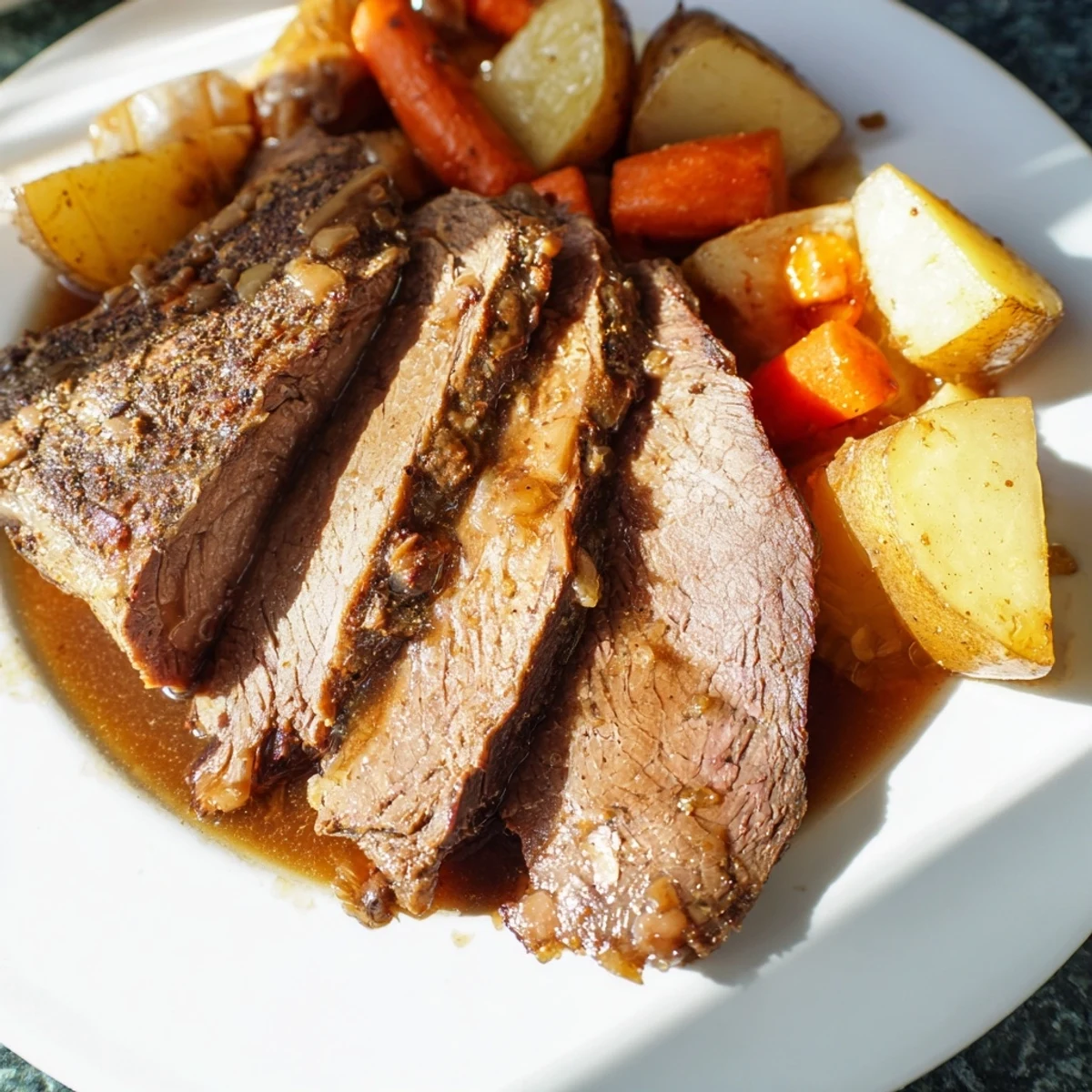
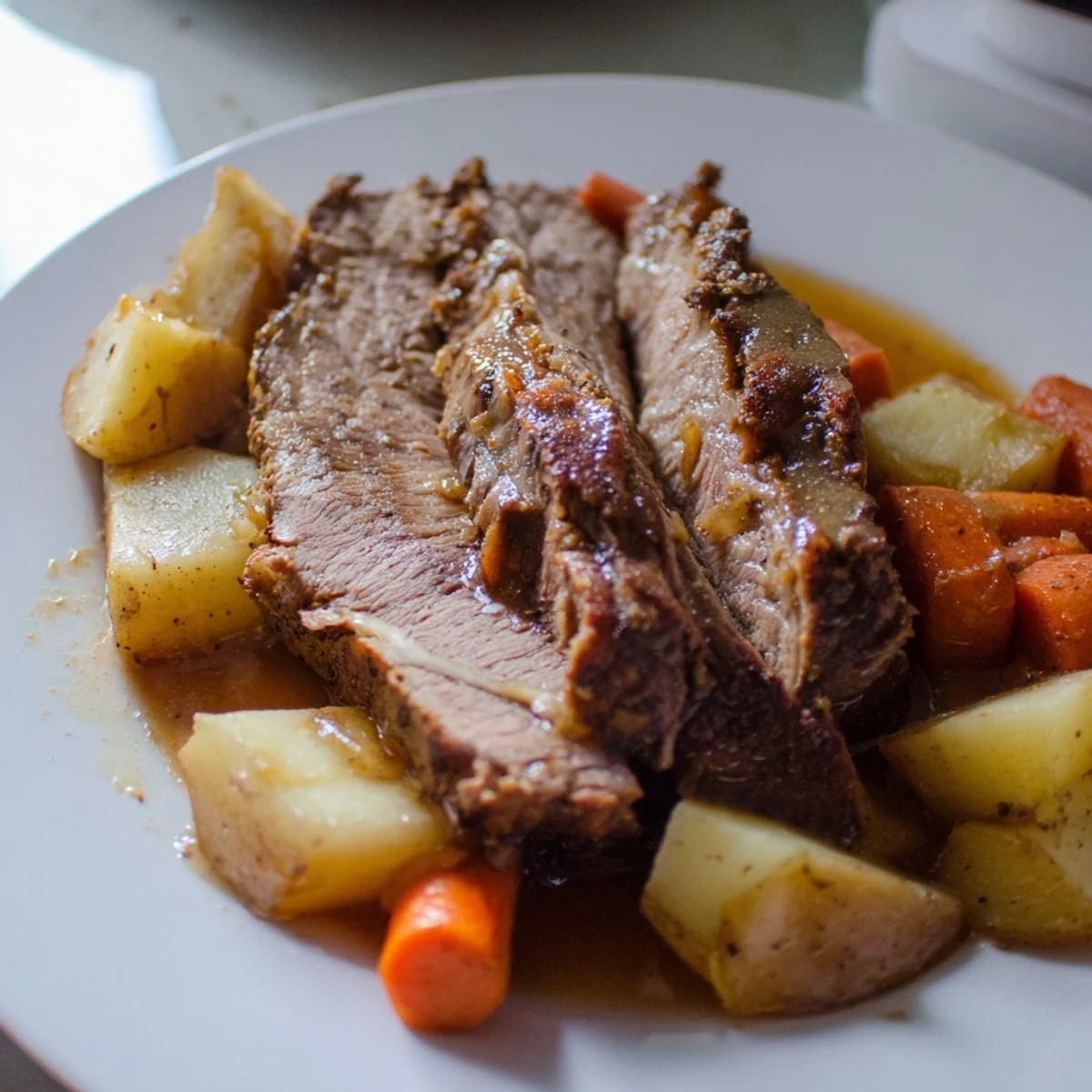
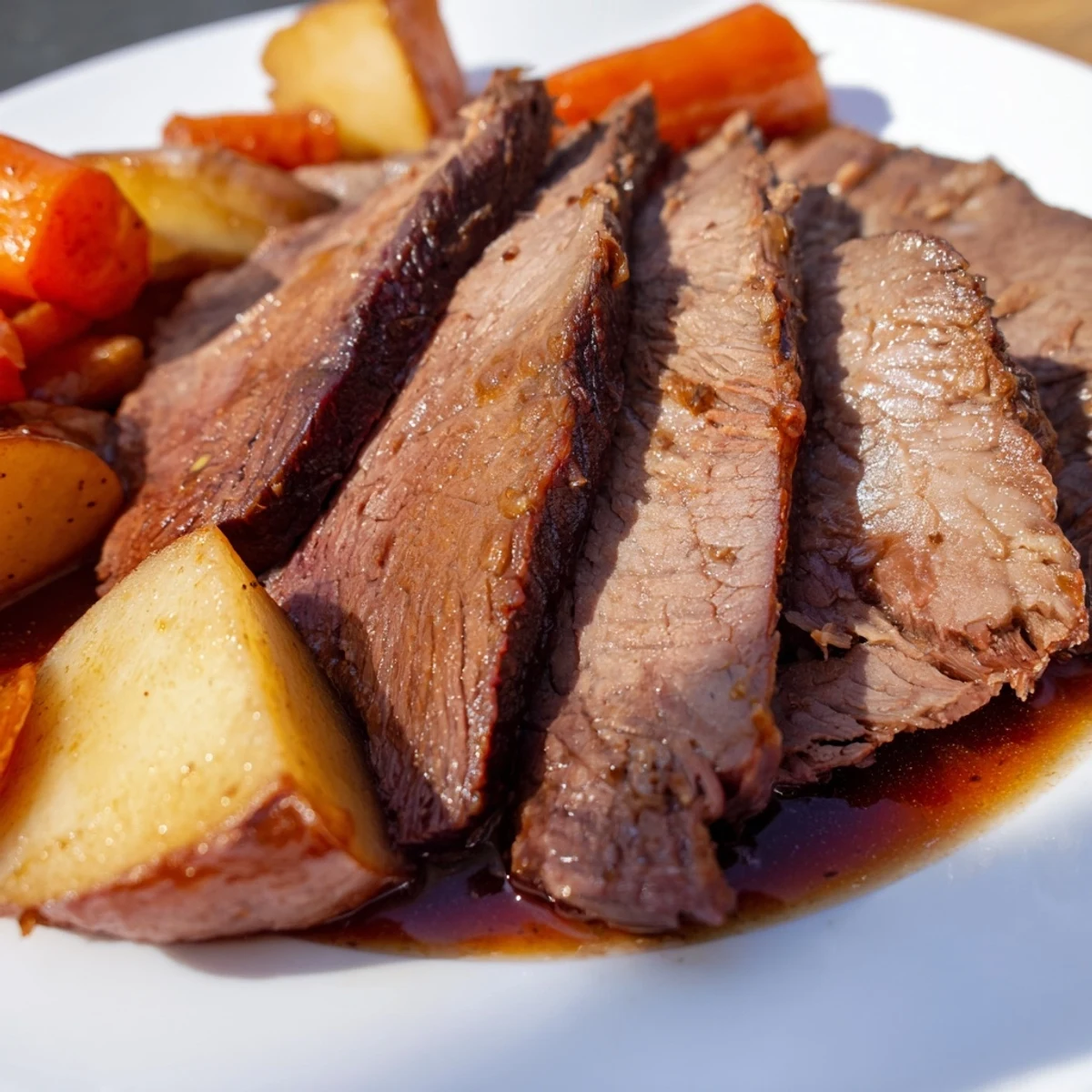
 Ce rôti de boeuf généreux marie la tendreté de la viande aux saveurs des carottes, pommes de terre et oignons. Après une saisie à l'huile d'olive, la cuisson lente au four avec thym, romarin et vin rouge développe des arômes riches. Les légumes cuisent dans le jus pour plus de moelleux. Parfait pour un dîner familial réconfortant, il se sert avec ses jus légèrement épaissis pour une touche gourmande.
There's something about the smell of beef roasting with thyme and rosemary that fills a kitchen with a kind of quiet confidence. I learned to make this dish on a grey Sunday afternoon when my neighbor stopped by and didn't want to leave, so I threw together whatever seemed right. What started as improvisation became the meal everyone requests now, the one that turns ordinary weeknights into something worth lingering over.
I remember watching my friend's eyes light up when she tasted this roast for the first time—she'd grown up eating similar meals but had never made one herself. That evening, we sat in my kitchen talking about our families and what food meant to them, and I realized this dish is really about creating those moments where everyone feels at home.
Ingredients
- Beef chuck roast (1.5 kg): This cut has just the right amount of fat and connective tissue to become incredibly tender when braised low and slow, and it actually gets better the longer it cooks.
- Carrots (4 large, chunked): They soften and sweeten as they braise, practically melting into the sauce if you let them cook long enough.
- Potatoes (4 medium, quartered): Waxy potatoes hold their shape better than starchy ones, though honestly, either works depending on whether you want chunks or something closer to falling apart.
- Onions (2 medium, quartered): They break down during cooking and add natural sweetness that balances the savory beef and herbs.
- Celery (3 stalks, 2-inch pieces): It seems like a background player, but celery gives you that deep, complex flavor you can't quite name but definitely taste.
- Garlic (4 cloves, smashed): Smashing releases the oils and lets the garlic mingle more freely with everything else rather than sitting in little chunks.
- Olive oil (2 tbsp): High heat searing needs a sturdy oil, and extra virgin burns too easily, so regular olive oil does the job perfectly.
- Kosher salt and black pepper: Season generously at the start—the long cooking time lets these flavors develop into something deeper than they seem initially.
- Dried thyme and rosemary (1 tsp each): Dried herbs are actually ideal here because they don't lose flavor during the long braise, unlike fresh ones.
- Bay leaves (2): They add an earthiness that subtly ties everything together without making themselves obvious.
- Beef broth (500 ml): Use good broth if you can—it's the foundation for your sauce, and thin broth means thin flavor.
- Dry red wine (120 ml, optional): It adds acidity and depth, cutting through the richness of the beef so every bite feels balanced.
Instructions
- Set your oven and prepare the meat:
- Preheat to 160°C while you pat the roast completely dry with paper towels. Dry meat sears better and browns deeper, creating that flavorful crust that will anchor the whole dish.
- Season boldly and sear:
- Coat the beef generously with salt and pepper on all sides. Heat your Dutch oven until the oil shimmers, then lay the roast in with confidence—you want that deep golden-brown color on each side, which takes about 8 minutes total and sounds like a satisfying sizzle the whole time.
- Build the flavor base:
- Once the meat is out, add onions, carrots, celery, and garlic to the pot and let them soften for 4 minutes, stirring occasionally to pick up all those browned bits stuck to the bottom. This is where you're building the foundation of your sauce.
- Bring everything together:
- Return the beef to the pot and nestle the potatoes around it, then scatter the herbs and bay leaves on top. The arrangement doesn't matter much except that you want everything in one layer so it cooks evenly.
- Add liquid and begin braising:
- Pour in the broth and wine, bring everything to a gentle simmer on the stovetop, then cover tightly and transfer to the oven. This slow, moist heat is what transforms tough meat into something tender.
- Let time do the work:
- Roast for 2 to 2.5 hours—the longer cooking time is for particularly thick or older cuts. The meat is ready when a fork slides through it with almost no resistance.
- Rest and serve:
- Remove everything from the pot and let the roast rest 10 minutes before slicing, which keeps the meat juicier. Serve it in shallow bowls with plenty of those pan juices and vegetables.
 Épingler
 There was a night when the power went out halfway through cooking and I thought the meal was ruined, but instead I finished it on the stovetop at a lower temperature and discovered the sauce tasted even better for it. Sometimes the imperfect moments teach you the most about what you're making.
Making the Sauce Your Own
The pan juices are already rich and flavorful just as they are, but some people prefer a sauce that clings to the meat. If that's you, fish out the roast and vegetables, then simmer the remaining liquid on the stovetop while stirring occasionally—after 10 minutes, it concentrates and becomes more velvety. Alternatively, mix 1 tablespoon of cornstarch with 2 tablespoons of cold water to make a slurry, whisk it into the simmering juices, and watch as everything thickens up within a minute or two.
Variations That Feel Like Discovery
Once you've made this roast a few times, you'll start noticing what you might swap out or try differently. Parsnips or turnips bring an earthy, slightly sweet flavor that replaces potatoes beautifully, and they're especially lovely in the cooler months when root vegetables feel right. You could also add mushrooms along with the other vegetables—they absorb the pan juices and become almost meaty themselves.
Wine Pairing and Serving Ideas
If you used wine in the roast, continue the pairing at the table with something robust and structured like a Cabernet Sauvignon, which mirrors the depth of the beef and doesn't get overwhelmed by the herbs. This is the kind of meal that wants crusty bread for soaking up sauce, maybe a simple green salad on the side to cut through the richness, and definitely room at the table for second helpings.
- Serve in wide shallow bowls so everyone gets meat, vegetables, and plenty of sauce.
- Let the roast rest those 10 minutes—it sounds like a small thing but it keeps everything more tender.
- Leftover beef makes extraordinary sandwiches the next day, especially on toasted bread with extra pan sauce.
 Épingler
 This roast has a way of becoming the meal people remember, the one they ask for by name. Once you make it, you'll understand why.
Questions fréquentes sur la recette
- → Comment obtenir un rôti bien doré ?
-
Saisissez la viande à feu moyen-vif dans de l'huile d'olive jusqu'à ce qu'elle soit bien brunie sur toutes ses faces, environ 8 minutes. Cela scelle les saveurs.
- → Puis-je remplacer les pommes de terre ?
-
Oui, les panais ou navets apportent une alternative intéressante avec une texture et un goût légèrement différents.
- → Comment épaissir la sauce obtenue ?
-
Retirez le rôti et les légumes, puis laissez réduire le jus sur feu moyen ou ajoutez un mélange de fécule de maïs et eau pour une texture plus consistante.
- → Est-il possible de préparer ce plat sans vin ?
-
Absolument, le bouillon seul apporte suffisamment de saveurs si vous préférez éviter le vin.
- → Quels aromates conviennent le mieux ?
-
Le thym, le romarin et les feuilles de laurier apportent des notes boisées qui complètent parfaitement le boeuf et les légumes.